
While alcohol is common in daily life, the consequences of drinking and driving can be severe, including accidents, injuries, fines, suspension of your licence, or imprisonment. Understanding the blood alcohol concentration (BAC) limits is crucial for making responsible choices.
To avoid these risks, drivers should never mix driving and driving; always plan an alternative ride home. Second, it’s important to educate yourself about impaired driving.
In this blog, we cover the legal blood alcohol concentration liimits in Ontario, penalties for driving under the influence, and when to get legal support..
What is Blood Alcohol Concentration (BAC) in Ontario?
BAC (Blood Alcohol Concentration) measures the alcohol level in your bloodstream, represented in milligrams of alcohol per 100 millilitres of blood (mg/ml) or as a percentage. In Ontario, driving with a BAC in or above the warning range can lead to penalties and immediate licence suspension under the Highway Traffic Act. A BAC of 0.08% or higher is a criminal offence across Canada.
What is the Legal BAC Level in Ontario?
The legal BAC limit for most fully licenced drivers in Ontario is 0.08%, indicating 80 milligrams of alcohol per 100 millilitres of blood. If a driver’s blood alcohol concentration exceeds this limit, they may face criminal charges, licence suspension, and fines. Additionally, at this level, impairments in judgment, coordination, and reaction time are evident, significantly increasing the risk of accidents.
Drivers with a BAC between 0.05% and 0.08% may also face penalties. If a driver in this range fails the Standard Field Sobriety Test, they could face a licence suspension of three to 30 days and a fine of up to $450, depending on whether they have previous offences.
How is BAC Measured in Ontario?
Law enforcement agencies use two primary methods to determine BAC levels:
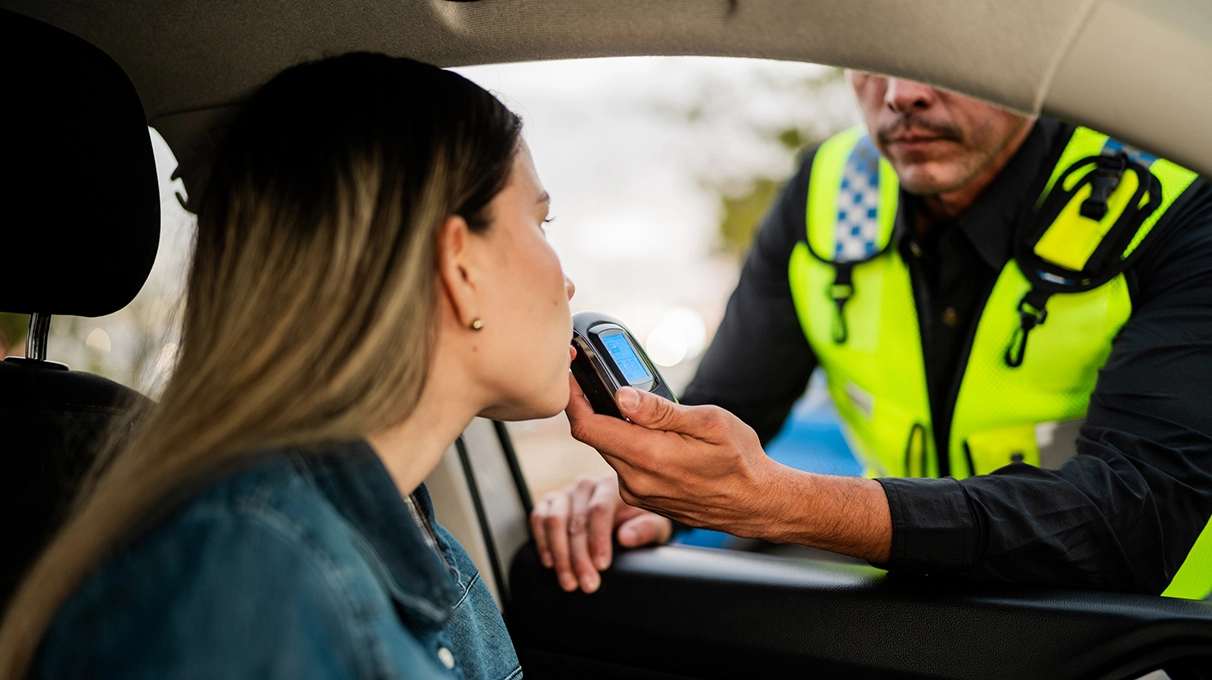
- Breathalyzer tests: The most common method uses a breathalyzer device to measure the alcohol content in your breath. The results provide an estimate of the alcohol concentration in your bloodstream. It functions like a breath-based litmus test for intoxication, and it’s important to be aware that failing this test can lead to legal consequences.
- Blood tests: Another accurate method involves drawing a blood sample, which is then analyzed in a laboratory. This method provides the most precise BAC measurement and is typically used when there are disputes over breathalyzer results.
What is the Alcohol Limit For Driving in Ontario for Fully licenced Drivers (G drivers)?
The legal BAC limit for a standard G licence is 0.08%, which means there are 80 milligrams of alcohol for every 100 millilitres of blood. If you operate a passenger vehicle and your BAC reaches or exceeds 0.08%, you are considered impaired under the law and may face serious consequences. Additionally, drivers can also be penalized if their BAC is in the “warn range,” which is between 0.05% and 0.079%. Being in the warning range can lead to penalties and fines.
What is the Blood Alcohol Level in Ontario for Novice Drivers (G1, G2, M1, M2)?
Novice drivers in Ontario, including those with a G1 or G2 licence, as well as M1 and M2 drivers, are subject to a zero-tolerance policy, which means they cannot have any detectable amount of alcohol (0.00%) in their bloodstream while driving. If drivers are found to exceed this limit, they face penalties such as immediate licence suspension and fines.
Alcohol Limit in Ontario for Young Drivers (Aged 21 and Under)
There is a zero-tolerance policy regarding blood alcohol levels for young drivers aged 21 and under. This means that drivers in this age group are not allowed to have any measurable amount of alcohol (0.00% BAC) in their system while operating a motor vehicle.
Warn Range Penalties (BAC 0.05 to 0.079%)
If a person has a Blood Alcohol Concentration (BAC) between 0.05 and 0.079 and fails the Standard Field Sobriety Test, the penalties are as follows:
First Offence:
- Immediate licence suspension for 3 days
- $250 fine
Second Offence:
- Immediate licence suspension for 7 days
- Mandatory education or treatment program
- $350 fine
Third Offence:
- Immediate licence suspension for 30 days
- Mandatory education or treatment program
- Ignition interlock requirement for six months
- $450 fine
Keep in mind that a licence reinstatement fee must be paid each time it is suspended.
Penalties For Criminal Impaired Driving Charges
Regardless of your age or licence status, if you are convicted of impaired driving in court, you may face additional fines and jail time, as well as the following consequences based on the number of convictions:
First Conviction:
- Licence suspension for at least 1 year
- Mandatory attendance in an education or treatment program
- Requirement to use an ignition interlock device for at least 1 year
Second Conviction (within 10 years):
- Licence suspension for at least 3 years
- Mandatory attendance in an education or treatment program
- Requirement to use an ignition interlock device for at least 3 years
- Mandatory medical evaluation to determine your fitness to drive in Ontario
Third Conviction (within 10 years):
- Lifetime licence suspension, which may be reduced after 10 years if you meet certain criteria
- Mandatory attendance in an education or treatment program
- Requirement to use an ignition interlock device for at least 6 years
- Mandatory medical evaluation to determine your fitness to drive in Ontario
Fourth Conviction (within 10 years):
- Lifetime licence suspension with no possibility of reduction
Factors That Affect Your BAC Level
BAC levels can differ greatly among individuals and even for the same person on different occasions. Key factors include:
- Gender: Women typically have higher BAC levels than men of equal weight after consuming the same amount of alcohol due to body composition differences.
- Weight: Individuals with lower body weight may experience a quicker increase in BAC than those who weigh more.
- Metabolism: Differences in alcohol metabolism can affect how long it stays in the system and influence BAC.
- Food intake: Eating before or while drinking slows down alcohol absorption, resulting in lower BAC levels, while drinking on an empty stomach can lead to a faster rise in BAC.
- Type of drinks: Cocktails can raise BAC more than beer if they contain multiple servings of liquor, while carbonation in drinks like champagne speeds up alcohol absorption, increasing BAC faster.
How To Estimate Alcohol Consumption
To estimate alcohol consumption relative to Ontario’s legal limit of 0.08% BAC for fully licensed drivers, it’s helpful to understand what constitutes a standard drink. In Canada, a standard drink contains about 13.45 grams (17.05 ml) of pure alcohol, which is roughly equivalent to:
- A 12-ounce (341 ml) beer with 5% alcohol.
- A 12-ounce (341 ml) cider with 5% alcohol.
- A 5-ounce (142 ml) glass of wine with 12% alcohol.
- A 1.5-ounce (43 ml) shot of spirits with 40% alcohol.
What Happens If You Refuse a Breath Test?
In Ontario, you cannot refuse to provide a breath sample when requested by law enforcement.
Breathalyzer testing is governed by the Criminal Code of Canada under section 320.27 (1), and Ontario’s Highway Traffic Act. Police can conduct random spot checks for impaired drivers without prior suspicion. While you can remain silent during questioning, refusing to cooperate may lead to a field sobriety test or a request for a breath sample.
By operating a vehicle, you consent to breathalyzer testing, and refusing one can result in serious legal consequences, including an immediate licence suspension for a minimum of 90 days, regardless of conviction status. The length of this suspension may increase with prior offences.
Refusal can also lead to a criminal charge of refusal to comply with a demand, which may result in longer suspensions, fines, mandatory alcohol education, installation of an ignition interlock device, and possible imprisonment for repeat offenders.
Some people mistakenly refuse a breath test, unaware of the consequences. However, legitimate reasons to decline, such as injury or illness, may exist.
Penalties for Refusal to Take a Breathalyzer Test in Ontario under the HTA
- Immediate suspension of your roadside licence for 90 days.
- Your vehicle will be impounded for at least 7 days.
- A fine of $550 will be imposed.
- Your licence will be suspended for 1 year.
- If you commit a second or subsequent offence within 10 years, you will be required to attend a mandatory education or treatment program.
- In the case of a third or subsequent offence within 10 years, you must use an ignition interlock device for a minimum of six months.
Penalties for Refusal of Breathalyzer Test in Ontario under the Criminal Code of Canada
In addition to the penalties outlined in the Highway Traffic Act, there are consequences under the Criminal Code of Canada if convicted:
- A criminal record.
- A minimum fine of $2,000 for a first offence.
- Possible imprisonment of up to 10 years.
- 30 days of jail time for a second offence.
- 120 days of jail time for subsequent offences.
- licence suspension for 1 year for a first offence, and 3 years for a second offence.
- Requirement to complete an education or treatment program.
- Installation of an ignition interlock device.
These penalties are subject to change and may vary depending on the specific circumstances of the case, prior convictions, and judicial discretion.
Can Impaired Driving Increase Car Insurance?
Impaired driving can greatly impact your current auto insurance policy and future coverage options. If charged with impaired driving, your insurer may cancel your policy or significantly increase your premium.
Drivers under the influence are often considered high-risk because their judgment and reaction times are impaired, leading to a higher likelihood of accidents. If you have an impaired driving charge or conviction, you can expect to pay much more for insurance, up to five times higher than drivers with clean records.
What to Do If You’re Charged With Impaired Driving
If you are charged with DUI for exceeding the alcohol limit in Ontario, follow these steps:
- Comply with law enforcement by cooperating with officers during the traffic stop and following their instructions.
- Invoke your right to remain silent by politely informing the officer that you wish to do so.
- Request legal representation immediately. If you can’t afford legal advice, you may qualify for a public defender.
- Avoid self-incrimination by being cautious about making statements before you have legal counsel present.
- Do not refuse testing, as refusing a breathalyzer or blood test can lead to serious consequences, including automatic licence suspension. It’s best to comply.
- Comply with arrest procedures by cooperating with the officer to avoid additional charges.
- Seek legal help by contacting an experienced DUI lawyer or paralegal right away for guidance and assistance.
Plan Ahead To Avoid Impaired Driving Fines
The best way to avoid the risks of impaired driving is to plan ahead. Consider having a designated driver, using public transit, staying overnight or calling a taxi or rideshare.
Remember, your safety and the safety of others should always come first. We’re here to help you with traffic tickets, but let’s work together to keep our roads safe.